.avif)
.avif)



When I was a Chief of Staff, the part of the job I loved the most was having a pass to every corner of the company and being the person who stitched it all together. I was the bridge between the CEO and the leadership team, between what the company said it was doing and what was actually happening, between people who wouldn't talk to each other without someone in the middle.
But being the bridge means you're always in service of where other people are heading. And that has a cost nobody really warns you about.
The hidden cost of being the bridge
You can hold context that nobody else holds. You can translate the founder's thinking into something the team can act on, absorb the tension so the company keeps moving, mediate the conflicts that would otherwise stall everything. That vantage point is rare and genuinely valuable.
That said, you can do all of that and still never be asked what you think should happen next. Over time, you become essential to the system without becoming essential to the direction. That isn't a workload problem. It's an identity problem, and it's the thing that burns Chiefs of Staff out faster than most people realise.
I know because that's exactly what happened to me. I went so deep into being the bridge at my company that I couldn't tell where I ended and the role began. I had horrible sleep, panic attacks, and the inability to switch off - because I believed the weight of the whole company was mine to carry. It took burning out to realise I'd never created the space to figure out what I actually wanted from the role, separate from what the company needed from me.
The gap between both sides
Now I coach Chiefs of Staff and founders, which means I sit on both sides of the same relationship. The pattern I keep seeing is this: the founder wants a thought partner who will challenge them, while the Chief of Staff wants permission to show up that way but doesn't feel like they've earned it yet.
Spotify’s founder, Daniel Ek, once described developing people as a progression - from making every decision for them, to only stepping in when it matters, to simply being there when they need you. Most Chiefs of Staff I work with are stuck in that first stage without realising the shift is even supposed to happen. They execute brilliantly. They solve the room. But they never cross into the territory where their perspective, not just their output, is what's valued.
Two versions of the same problem
As I write this article, I’m reminded of two coaching client conversations I had recently:
Jolene’s founder trusts her completely and quotes her in leadership meetings. But she wears three hats at once - Chief of Staff, Head of Partnerships, interim Head of Finance - and she's spent so long proving she can bridge every part of the organisation that she's never stopped to ask which of those bridges she actually wants to keep building.
Marco runs logistics, finance, and new market launches - but draws a blank when his CEO asks where the company should go next. He drew blank because he'd never decided which part of the role was truly his. No strategic point of view, because he hadn't chosen what to care about deeply enough to develop one.
The question underneath these stories is the same one I eventually had to ask myself: how do you move from being the bridge to being someone who also gets to decide where the bridge leads?
What I've learned from sitting in both chairs
I don't think there's a clean three-step answer. But I know it starts with naming what you actually want - not what the company needs from you, but what you want from the experience of being in this role. When you don't name it, you default to whatever is asked of you, and what's asked is always execution.
And I believe it requires a kind of courage nobody prepares you for - it requires the courage to do less. To say "I don't know" when everyone is looking at you. To let a problem sit because the organisation isn't ready to solve it right now. To trust that your value doesn't come from making everything work, but from helping the right things work.
The best Chiefs of Staff I've worked with never stop being the bridge. But over time they start choosing which bridges to build, and they develop a point of view about where those bridges should lead.
You're not failing. You're ready.
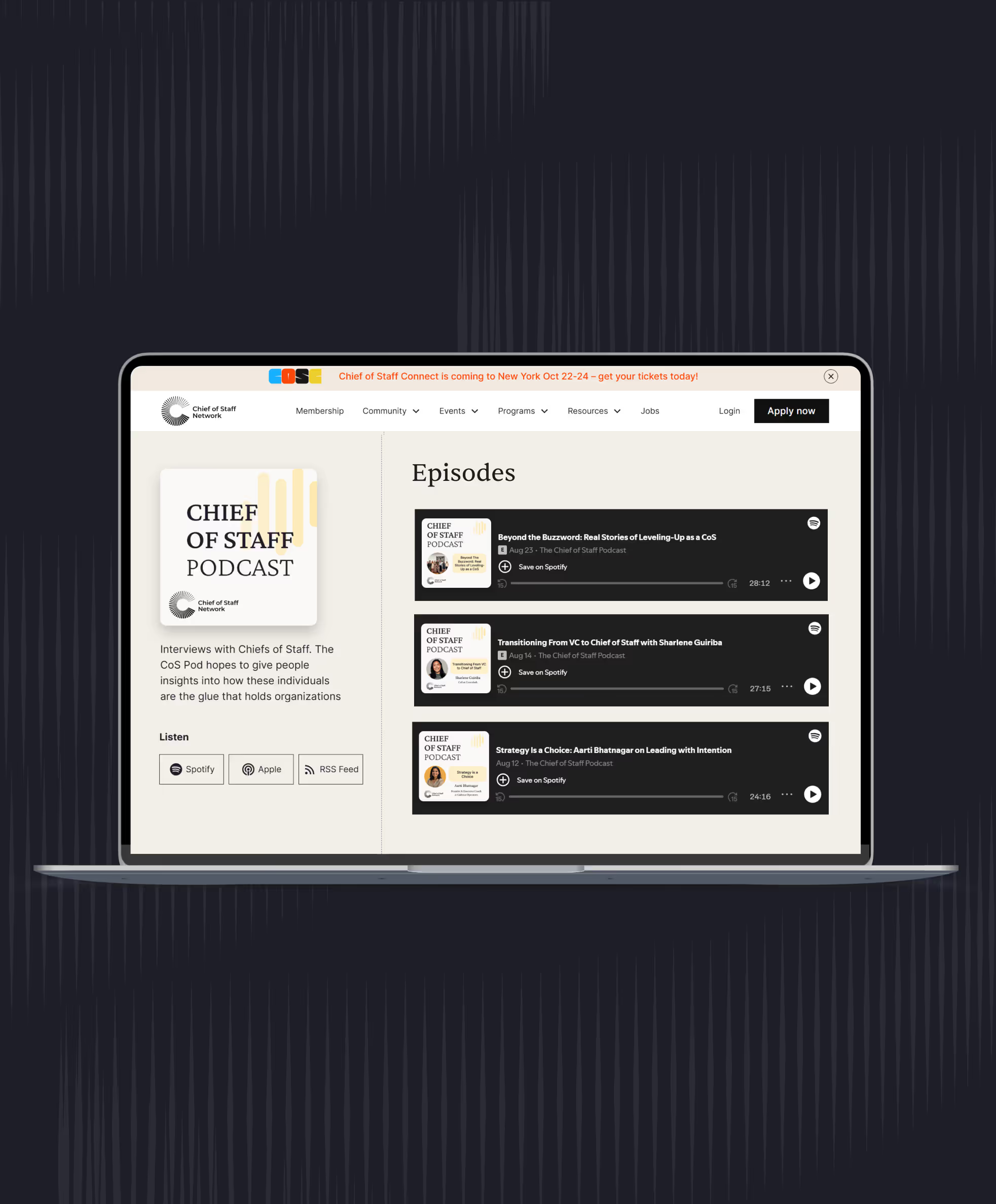
I recorded a podcast recently with Priyanka Peeramsetty, an operations director at Crunchyroll who's held multiple Chief of Staff roles across her career. She described the role as "the bridge between what the company has been versus what it can be" - which is really love because it’s a reminder that while we’re expected to be in the weeds, sometimes we also just need to stick our heads up.
If you're in the middle of that right now and some of this sounds familiar, the struggle is normal. It's not a sign that you're failing. It's a sign that you're ready for the conversation.
Listen to the episode
Tristan Lim is the founder of Beyond Founders and a coach to Chiefs of Staff and founders. He is a Fellow at the Chief of Staff Network, where he hosts events, teaches courses, and writes about the evolving nature of the role. You can reach him at tristan@beyondfounders.com.