.avif)
.avif)


A couple of years ago, I left my Chief of Staff role and didn't have anything lined up after it.
I gave myself space. I rested, travelled, journalled, and spoke to people with interesting life journeys. I picked up coaching as a side project before I had the language for it. I just knew that the 1on1 work I’ve been doing with founders & chiefs of staff was work I wanted to continue doing. It was messy, a little scary, and mostly figured out one month at a time.
I'm writing this article because of that question — what comes next? — is the one I get asked the most often by the Chiefs of Staff. And in the last few weeks, I had two conversations that helped me make more sense of it. One with Zoe Jakubowich, a fractional Chief of Staff and early-stage consumer investor based in New York. One with Lissa Sorgenfrei, a Chief of Staff turned founder (after building a German construction software startup for 8 years). Lissa now runs the Munich Clay Collective - a pottery studio in Munich.
Despite them both having quite different paths, they both sat with the question of ‘What Comes Next’.
What I learned from Zoe and Lissa
When I asked Zoe how she ended up as a fractional Chief of Staff, she told me she'd realised she was a "forever generalist." She'd worked in management consulting, internal strategy, product management — and somewhere across those roles, she stopped looking for the right title and started looking for the right shape of work. Today she's juggling five client engagements across consumer, B2B, beauty, and food, plus screening deals for a venture fund. "I love finding my replacement," she told me.. Most people tend to optimize for becoming indispensable. She currently optimises for the opposite.
Lissa's story unfolded inside one company instead of across many. She was one of the first employees at Capmo, joined as a customer success manager, became their first product manager, and eventually carved out a Chief of Staff role that didn't exist before her. After that, she moved into go-to-market, struggled with losing the full-company transparency she'd had as CoS, and started doing pottery on Fridays just to get out of her head. The studio idea grew from there. She negotiated down to a four-day work week with her CEO before fully leaving — not a clean break, but a slow, deliberate transition.
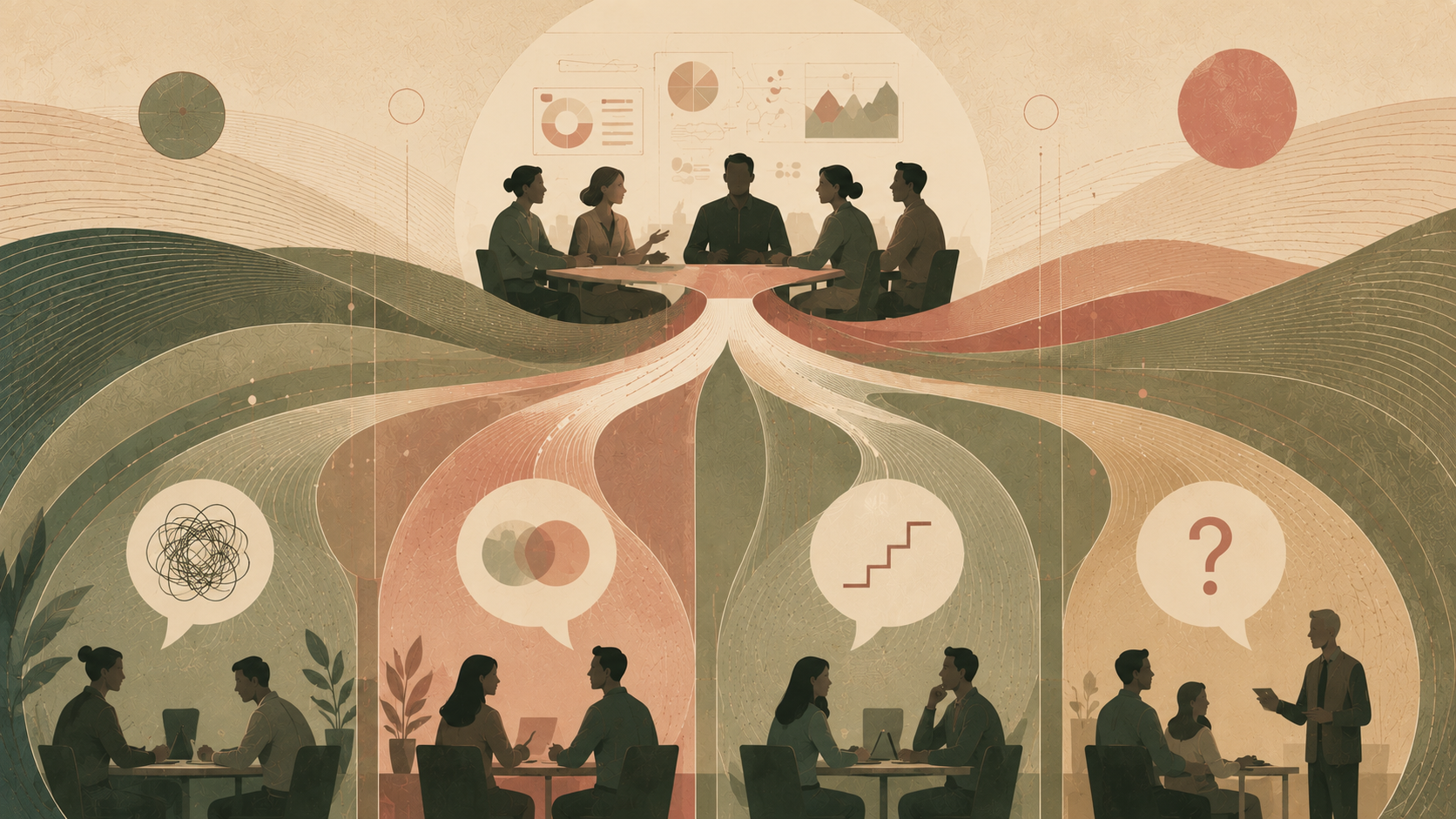
What surprised me is that they each, independently, gave me almost the same map of what comes after the role. Zoe described three paths: become a founder or CEO, climb into a C-suite executive seat, or go independent. Lissa described three too: grow into a Chief of Staff office and lead it, specialise into a department or function, or go build your own thing.
They both carried the same question, but they went in different (yet similar) directions.
Where do you put your high-agency-ness?
The thing the Chief of Staff role really trains, in my opinion, is high agency. You learn to walk into ambiguity without a script. You learn to identify the right problem before solving the wrong one. You learn to influence without authority and to act without permission. You learn how to learn fast.
That muscle doesn't disappear when the role ends. The question is where you point it next.
Zoe pointed it at building her own portfolio. "I'm the strictest boss I've ever had," she said. "It's my company. It's my name." She talked about reframing stability as resilience — diversified revenue, multiple clients, a network deep enough that she's never one bad quarter away from a crisis. "The horse that can feed itself is the one that's gonna live in an apocalypse," she joked at one point. (She told me afterwards she wished she'd said that on the recording. So here it is.)
Lissa pointed hers at building something tangible — a physical space, a small business, a community of people who come to her studio to spend three hours away from their phones. The skill that carried over wasn't product management or strategy. It was the ability to grasp a new problem quickly, find the right people to help her, and learn whatever she didn't know. "It's been the best possible training ground for being an entrepreneur," she told me about her CoS years.
Both of them used the same muscle. They just put it in different rooms.
Stay. Level up. Leave. Specialise. Build.
If I synthesise what they said with what I see in coaching, the menu of next moves looks roughly like this:
- Stay and grow inside the role. As the company scales, the Chief of Staff office can become a function in its own right — a small team you build, lead, and define.
- Level up into a C-suite seat. COO, CSO, sometimes CEO. The strategic muscle compounds, and the relationships you've built often surface the seat before it's posted.
- Leave for the same role at another company. Different stage, different industry, different principal. A reset that keeps the form.
- Specialise into a function. Operations, product, marketing, finance, people. You give up the panoramic view in exchange for depth in one area.
- Build something of your own. Found a company, go fractional, start a portfolio career. Independence as the structure.
None of these is the right answer. They're trade-offs. Climbing inside means continued proximity to one mission, with less optionality. Specialising means depth at the cost of breadth — and Lissa was honest about how hard giving up that transparency was for her, even when the new role was a logical fit. Independence means full ownership of your time and income, but as Zoe put it: "If you don't want to go hustle, it will not be good for you. If you want to build something, this is a different kind of building."
What you choose depends on what you're optimising for. Stability of income. Stability of identity. Speed of learning. Proximity to a mission. Time freedom. Some combination of all of the above.
What i’m seeing South East Asia
I've been back in Southeast Asia for a year now (I travel between Berlin, Malaysia, and Singapore), and I notice something different about the conversations here. There's more risk-aversion, when it comes to leaving a stable corporate role to build something independent. Some of that is cultural — corporate work still carries strong status, and the social cost of "going off on your own" is heavier in places where family expectations sit closer to your daily decisions. Some of it is structural. Government support for solo operators, freelancers, and early-stage founders is, in many SEA countries, just less developed than in the US or parts of Europe. There's no obvious safety net if it doesn't work (unlike in Germany, where you have dedicated Startup Funding from the state)
I feel that when the downside of building your own thing feels closer to "ruin" than "I'll figure it out," fewer people pick that path. Also, not everyone needs to leave to build their own thing. Staying and shaping the role you're in is also a respectable path.
I'm inspired by where Chiefs of Staff go
What I love about both Zoe and Lissa's stories is that neither of them ended up where they started. Neither of them planned the destination at the beginning. They followed the work that gave them energy and let the path become legible in hindsight. As the saying goes - you can really only connect the dots looking back.
I see this everywhere I look. Former Chiefs of Staff are starting funds, opening studios, going fractional, becoming COOs, founding companies, writing books, hosting podcasts, running incubators, leading strategy at much bigger orgs, going back to school, taking sabbaticals, becoming coaches (hi). The role doesn't funnel people into one outcome. It fans them out.
That fan-out, I think, is the actual gift of the role.
The Part We Skip
I speak with Chiefs of Staff every week who are sitting with the question of what's next. And the pattern I see, again and again, is that we move straight from the question to the answer. We try to solve "what next" the way we'd solve a problem at work — fast, structured, conclusive.
But the most important part isn't the answer. It's the space to even ask the question.
Most of us spend our days in service of someone else's vision — our principal, our team, our company. Turning that same energy inward can feel strange. Confronting…or even selfish. After years of being the person who holds context for everyone else, it can feel embarrassing to admit that you don't really know what you want for yourself.
I think that feeling — the emptiness, the dread, the thing you avoid by booking another meeting — is actually the signal we should be paying attention to. It's the signal that you've spent so long bridging other people's directions that you haven't yet asked where you want to go.
The exploration after that signal is the work. Following your curiosity. Trying things. Saying no to the obvious next step long enough to hear what's actually underneath. This is the part I wrote about in my last article — the conversation every Chief of Staff needs to have, first with themselves.
If you're sitting with the question right now, I'd just say: stay with it longer than feels comfortable. The path becomes clearer not when you make faster decision, but when you start to see yourself more clearly.
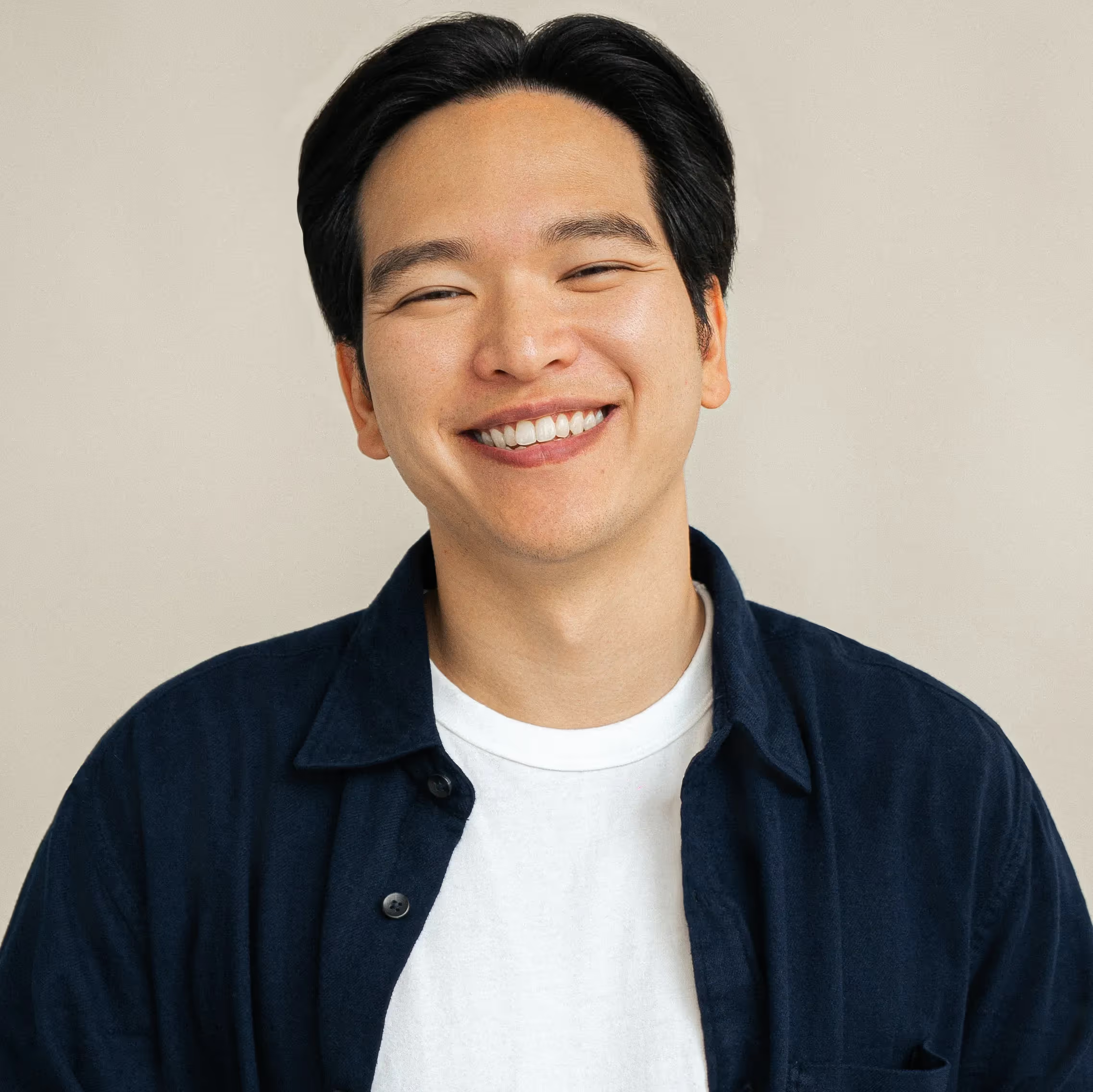
Tristan Lim is the founder of Beyond Founders and a coach to Chiefs of Staff and founders. He is a Fellow at the Chief of Staff Network, where he hosts events, teaches courses, and writes about the evolving nature of the role. You can reach him at tristan@beyondfounders.com.